
Album Covers


Image Transfer

On-Location with Bounced Off Camera Flash Portraits


16 Personalities Test
Result: “As an ENFP (Campaigner), you are a vibrant force of enthusiasm, creativity, and idealism. Your mind is a constant whirlwind of ideas and possibilities, each more exciting than the last. You approach life with an infectious energy that draws others to you, your charisma and genuine interest in people making you a natural connector and inspirational force.
Your curiosity knows no bounds, and you have an insatiable appetite for new experiences and perspectives. This openness, combined with your vivid imagination, allows you to see potential and opportunity where others might not. You’re not just a dreamer, though – you’re a dreamer with a mission, driven by a deep-seated desire to make the world a better place.”
Personality Reflection
I agree with my result because I think that my personality does revolve around creativity more than it does other aspects. I think that I am also full of ideas and possibilities when it comes to situations. Especially when it comes towards artistic approaches. I’m unsure if each new piece is more exciting than the last though. But I think that I am social enough to be seen as magnetic, but I think that my calm yet silly nature may be more attractive to meet great people. Although I think that my charisma is awkward, I think I do have natural connections with the people I meet and the friends around me.
I think that I do have a curious nature and that it extends beyond what most people would like to know. I am always excited to have new experiences and perspectives. I think on the scale I agree that I am leaning more towards being an extrovert, but I do have an introverted nature. I think that I do want to make the world a better place and that I do have a lot of ideas. But I very much agree that my flaws are that I let these ideas get ahead of me and I lose sight of what the journey is. I also value emotions and sensitivity more than logic at times.
A Letter to Future IB Students
To the future IB Photography Students,
Although you may have taken this class under the impression that it is an easy IB elective class, I assure you that this class is heavy assignment. Mrs. Cauchon is kind enough to give you guys a long duration to complete the assignment, or to even extend the date… but DO NOT procrastinate. Some assignment due dates overlap each other, and the buildup can become overwhelming on top of your other (assumed) IB classes and/or regular classes. Assignments can be fun to do with groups, though make sure that you are productive with them. If you slack off, you may be doing assignments at the last minute. Quality is always better than quantity, so try your absolute best in this class and be creative. Do not just reach for the bare minimum, you never know what potential you might discover through your photography journey. As you can gain confidence in it!
In this class, there are many students who are also dealing with the same assignments as you are. It is important that when you guys’ complete assignments such as taking photos, that you are mindful of the space and that people may also need the room to shoot! This class has taught me the various techniques of photography such as the importance of editing and how to use camera settings to your advantage for the best photos. Mrs. Cauchon will always ask you to edit your photos and not just upload raw pieces to further your growth in lightroom and photoshop. It has always come in handy and has taught me a lot about the significance of editing. This has been one of my productive and fun classes, but you must put your heart into it to have the same wonderful experiences.
The exhibition is something important in your class, and you’ll spend a portion of the year dedicating yourself to that. Mrs. Cauchon provides all the resources needed to be able to have a good score on it. But choose a topic that is heavily impacted, as research will be easier. Overtime, you may find a specific type of photography that you like to do. But it is also important to have direction of style or topic. We learn a lot through peer review, and the course leads us through camera management and how to become greatly technological towards your computers. In this class, everything becomes your tool so use it to the best of your advantage! I hope you have as much fun as my friends and I did. But also, remember that there is an equal amount of constructive criticism and growth that comes along the way!
Sincerely,
Pristine Sen-Choun
Below Angles


Handwriting

IB Photography & Art Exhibition Presented by Jurupa Hills High School

Monochromatic Sequences


5 Photos


Light-Painting: Results


Mixed Media: Audrey Hepburn

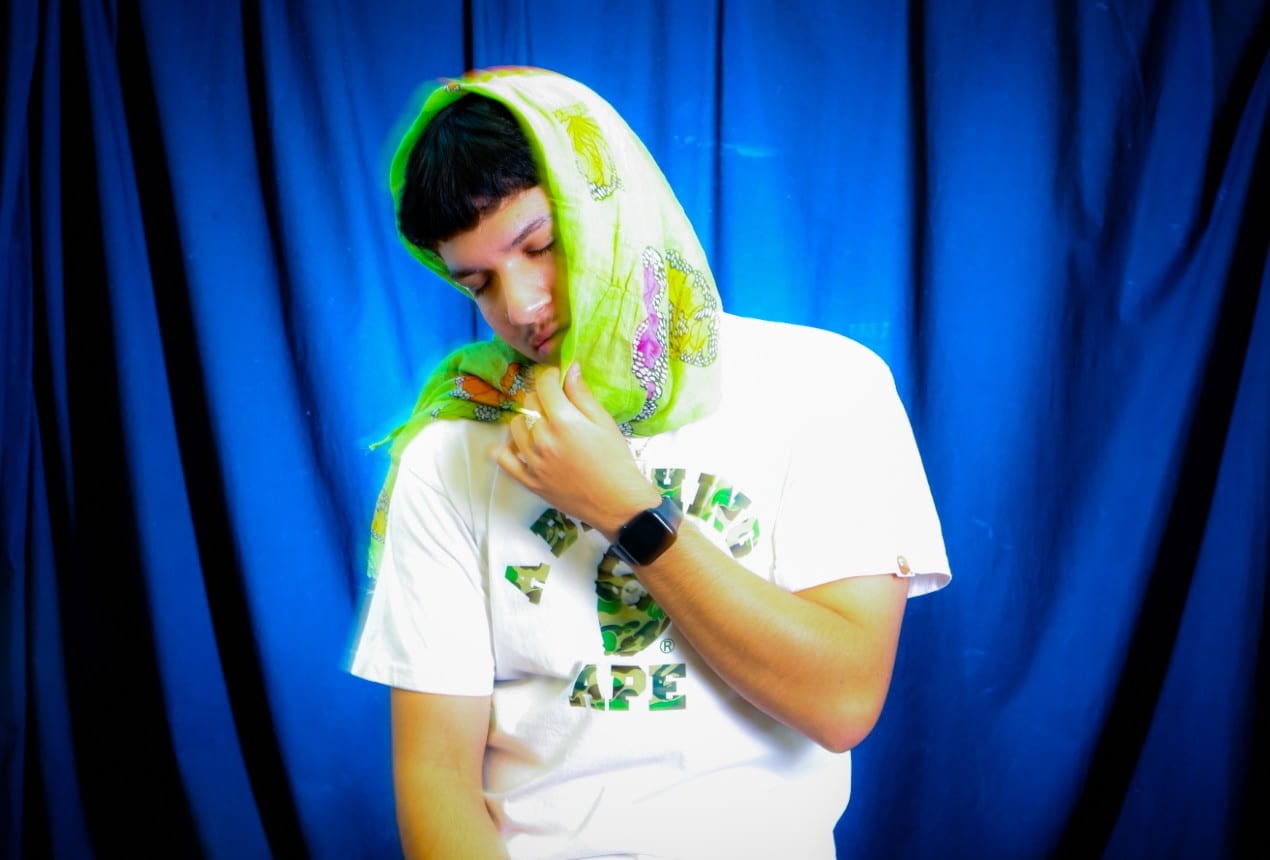
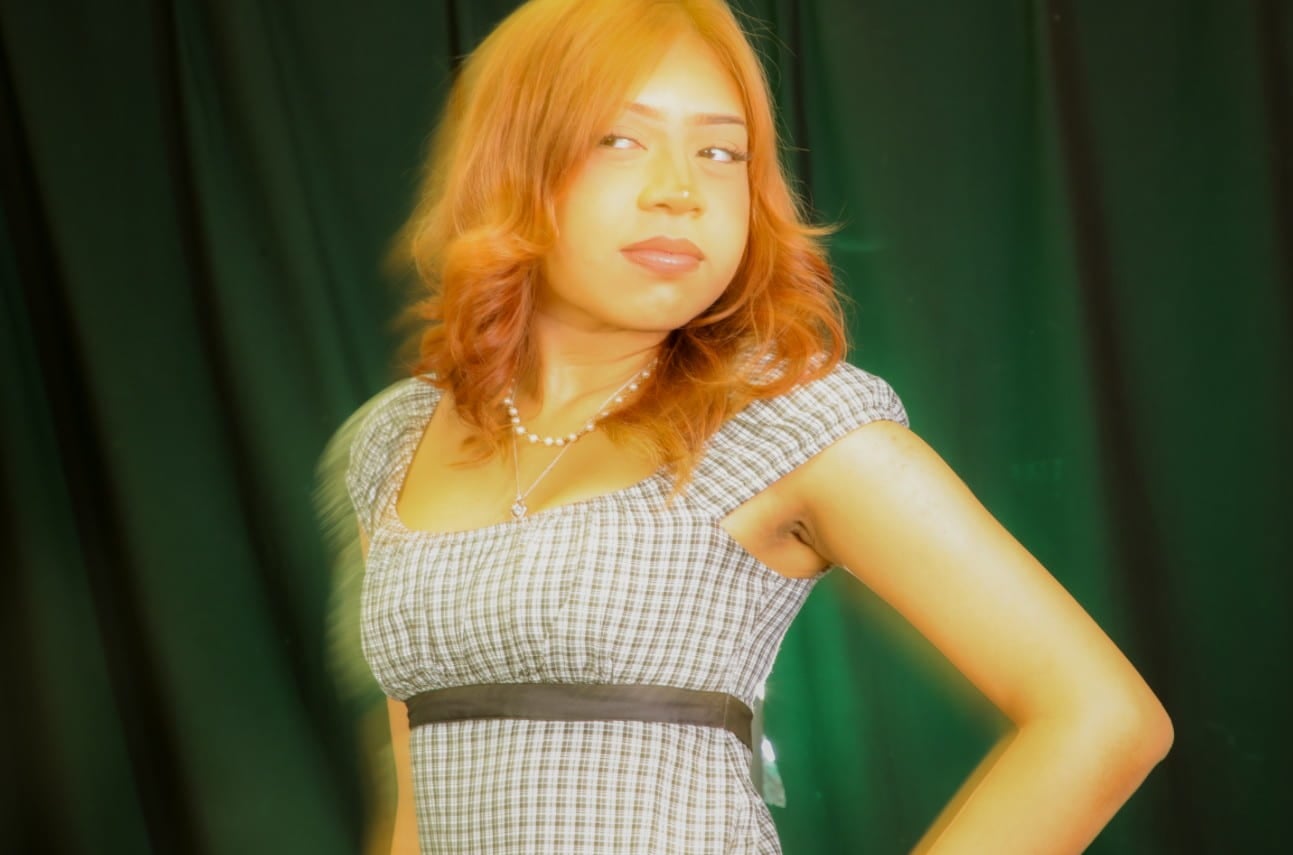
Studio Portraits / Still lifes using strobes



Block Art Printing Result: Sea Turtle

Recreational Photo

Scavenger Hunt (First Lightroom Sessions) Partner: Daniel Zazueta


Surrealism Project

Another Surrealism Work by Another Artist: Salvador Dali (“Swans Reflecting Elephants”)

Swans Reflecting Elephants by Salvador Dali
In this photo, my interpretation of this photo is that the swans want to feel some type of superiority in their habitat. Through the use of a double-image, Dali uses a reflection to revoke a kind of dream that one’s identity is not their own. But shows a reality of who they wish to be. The artist tries to communicate the theories of reality and how times were like during WWI and his rationalist thoughts during the times.
Scavenger Hunt (Independent Photos)


Scavenger Hunt (Online)


What the Camera Settings Are and How to Use them
- What is aperture, shutter speed and ISO?
An aperture is the size of the lens opening, with the lower number widening the lens and the highest number allowing less light within the lens. The shutter speed is how long the lens stay open, for example: if the shutter speed was faster, then the photo would have slower motion. An ISO is the sensitivity to light, with a low ISO being low sensitivity and a high ISO having high sensitivity.
2. When would you need to change your ISO?
You would need to change your ISO if you’re in an environment where you can’t adjust your shutter speed or there isn’t enough light. If you are in a dark setting, you would need to increase your ISO to brighten your photos. Whereas if you are in a place where the light is brighter, you would need to lessen your ISO to avoid overexposure, maintaining a higher quality photo.
3. What are aperture and shutter priority settings?
The aperture and shutter priority settings are considered as semi-automatic modes that allow photographers to take care of exposure photos manually. Aperture priority (A or Av) allows you to choose the aperture, and the camera chooses the shutter speed to be able to control depth of field (DoF). The shutter priority (S or Tv) allows you to choose the shutter speed, but the camera chooses the aperture. This can help with photos that need freezing or motion control focus.
4. What are AF modes how do you change them?
The AF (autofocus modes) are controls to which it handles how the camera can focus. For example, if you are using a single AF (AF-S), you would press the shutter halfway. Though if you were using a continuous AF (AF-C), you would make sure to keep the shutter fast to be able to make sure to focus on the subject moving. Lastly, the auto AF (AF-A) would choose between the AF-S or AF-C based on the environment you are taking a photo of. Normally, you can change through these settings by using the menu to switch the camera lens or body.
5. Why do you need to meter the light to get the right exposure?
You would need to meter the light to get the right exposure to be able to measure light and have a balanced photo if you were in areas with too much light or less light. This allows you to be able to be able to understand when to adjust aperture settings, shutter speed, and ISO to have better exposure in your photos.
6. What is the difference between a normal, wide angle and telephoto lens?
The difference between a normal, wide angle, and telephoto lens, is that a normal lens is normally around 55mm on the full frame. This gives a natural vision to what your eyes would normally see. A wide-angle lens is <35mm, which gives a wider view of the area. Which is more suitable for landscape photos. A telephoto lens (>70mm) allows for further zoom on subjects that are far away, which is more dedicated to sports, portraits, or wildlife photography.
7. What is white balance and why would you need to change it?
The white balance feature on your camera changes the color temperature of your camera so that the whites within your photo shows as purely white. Because there are different types of lights, given by the amount of sunlight or shade there is, a photo may have warmer or cooler tones. You would need to change the white balance to avoid the color from tinting oddly. For some of your photos might show colors that do not truly represent the atmosphere.
8. What is the depth of field and what is the difference between shallow and good?
The depth of the field shows how much color is within focus of the camera. The difference between shallow and good is that a shallow DoF allows for a smaller area of focus, making the background blurry. Yet a good DoF focuses on everything that is spotted by the camera lens. Meaning everything, including the background, is in focus.
9. What are drive modes and metering modes?
The drive modes are the controls to which it allows how many photos are taken by the camera depending on the shutter speed. These drive modes include continuous, burst, and timer. The metering modes show how a camera can read light within the frame, this can either be a matrix, center-weighted, or spot metering modes. Where light focuses on specific parts of the frame.
10. What is exposure compensation?
Exposure compensation (+/-) either allows you to make the photo lighter or darker. (+) = to make the photo lighter, (-) allows you to make the photo darker. This often helps a photographer in correcting the light exposure when the camera has judged the light wrong in certain environments.
Camera Simulator
By using the camera simulator, it helped me understand the importance of focus and exposure. When it comes to beginner photographers, it is important to understand how to use aperture and shutter speeds. It also helped me build perspective on how light changes the quality of the photo, and how important it is to be able to change the way that the settings are based on the environment. I was able to use this simulator to help me understand the settings, and how to apply this to future photos that I will work on. Which gives me ideas on how to handle portraits or landscape photos. By using a simulator for photography, it helped me to build creative thinking while also taking photos that are appropriate for the scene.